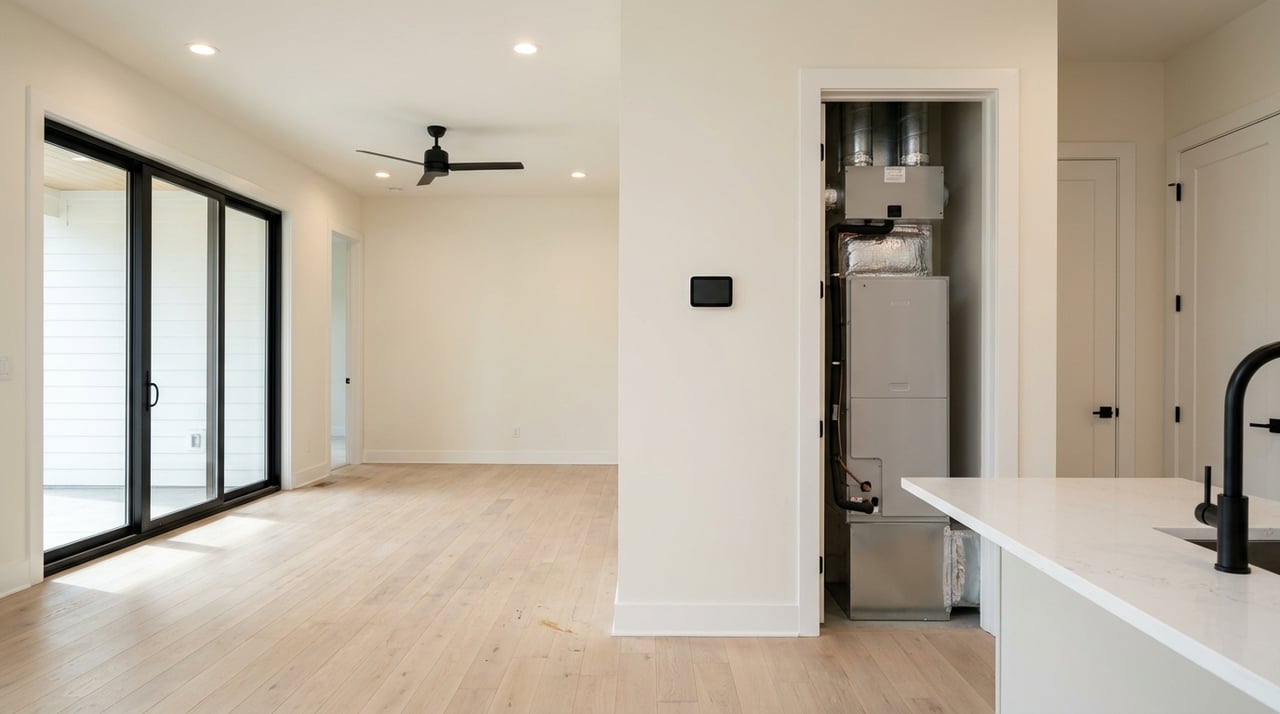
Building a new home in Papillion should feel exciting, not overwhelming. You want a home that stays comfortable through our hot summers and cold winters, without surprise utility bills or maintenance headaches. In this guide, you’ll learn exactly which energy-efficient features to prioritize in Papillion new builds, how they impact comfort and costs, and which local rebates can help you save. Let’s dive in.
Why efficiency matters in Papillion
Papillion sits in a mixed climate with hot, humid summers and cold winters. Industry guidance treats our area as IECC Climate Zone 5A, which influences the right insulation levels, window performance, and HVAC strategy for your new home. You can confirm that context by reviewing federal guidance for cold and very cold climates in the Midwest from the Department of Energy’s Building Technologies Office. DOE’s climate guidance for cold climates is a useful reference.
Local utilities also shape your choices. Omaha Public Power District (OPPD) provides electricity and offers homeowner rebates for qualifying HVAC and smart thermostats. Natural gas service in much of Sarpy County is provided by Black Hills Energy, which also supports customers with service information and supplier options. You can review OPPD’s customer programs and Black Hills Energy’s natural gas services as you compare operating costs.
Finally, energy codes are enforced at the local level. Ask your builder or the Papillion building department which IECC edition applies to your lot, plus any local amendments. A quick overview of Nebraska code adoption practices is summarized here: Nebraska permit and code adoption overview.
Building envelope essentials
Insulation targets for Zone 5A
Insulation and air sealing are the foundation of an efficient home. For new builds in Papillion, practical targets to discuss with your builder include attic insulation in the R-49 to R-60 range, and exterior wall assemblies that meet prescriptive code paths, such as R-20 cavity insulation plus R-5 continuous exterior insulation or R-13 cavity plus R-10 continuous insulation. Basement and slab-edge insulation should also meet current code for our climate. The Department of Energy’s homeowner guidance on insulation best practices is a great starting point.
Ask what materials the builder uses and why. Options can include blown-in cellulose or fiberglass, open-cell or closed-cell spray foam, and continuous rigid exterior insulation. The right combination improves comfort, reduces noise, and helps avoid condensation issues.
Air sealing and verification
A tight home is an efficient, quiet, and comfortable home. Request the builder’s air-sealing scope, whether they target a specific blower-door test number, and if they perform duct leakage testing. Third-party verification programs like ENERGY STAR for Homes require aligned air barriers and commissioning steps. You can learn what those verification steps look like in EPA materials on ENERGY STAR Certified Homes.
High-performance windows
What to look for
In our climate, double-pane low-E windows with argon fill are a smart baseline. If you prefer even quieter rooms and improved comfort near large glass areas, ask about triple-pane options. Focus on the NFRC whole-unit label for U-factor and Solar Heat Gain Coefficient rather than center-of-glass numbers. In colder climates, a lower U-factor is a priority. On south-facing windows with good overhangs, a moderate SHGC can help capture winter sun.
Heating, cooling, and smart controls
Cold-climate heat pumps
Modern air-source heat pumps perform well in Climate Zone 5A and can handle both heating and cooling efficiently when sized and installed correctly. Ask your builder or HVAC contractor for Manual J load calculations and model-specific cold-climate performance data. OPPD also offers rebates for qualifying high-efficiency systems, which typically require pre-approval and documentation. Review OPPD’s HVAC Smart rebates with your contractor early in the process.
High-efficiency gas or dual-fuel
If you prefer a gas furnace, confirm the AFUE rating is 95 percent or higher. Some buyers choose dual-fuel systems where a heat pump does most of the work and a gas furnace runs during very cold snaps. Installation quality, correct sizing, and duct design matter as much as the equipment label. For gas service basics and supplier details, review Black Hills Energy’s natural gas services.
Smart thermostats
Smart thermostats can trim peak energy use and improve comfort. They also unlock utility bill credits in some programs. OPPD’s smart thermostat program provides enrollment incentives and may offer ongoing participation credits. See OPPD’s Smart Thermostat FAQs and confirm eligibility before installation.
Ventilation and indoor air quality
Balanced fresh air: HRV vs ERV
Efficient, tight homes need controlled fresh air. A balanced mechanical ventilation system using an HRV or ERV delivers continuous fresh air while recovering most of the heat that would otherwise be lost. An ERV also manages some moisture transfer, which can be useful during humid summers. For a clear, homeowner-friendly overview of how HRVs and ERVs work, review this HRV/ERV guide. Ask your builder which option they recommend for Papillion’s climate and how filters or cores are serviced.
Hot water and efficient appliances
Heat pump water heaters use far less electricity than standard resistance tanks, which can lower operating costs and improve your home’s energy profile. For gas-fired setups, tankless or condensing water heaters can reduce fuel use. Federal credits may apply when equipment meets efficiency thresholds and is properly documented. Start with the Department of Energy’s overview of the Energy-Efficient Home Improvement Credit and confirm details with your tax professional.
Electrical readiness: solar and EV
Solar-ready planning
Even if you are not installing solar on day one, it pays to be ready. Ask for a labeled, capped conduit from the main panel to the attic or roof, dedicated breaker capacity, and a roof area free of vents and shading. OPPD provides guidance for customer-owned generation and net metering on its website. Your builder can coordinate roof layout and a future wiring path so you avoid cutting drywall later.
EV charging in the garage
A dedicated 240-volt circuit or pre-run conduit to a convenient garage location is a low-cost add during construction compared to retrofitting after move-in. Ask the electrician to identify spare breaker space for a future charger and note any permit requirements for upgrades down the road.
Verify quality and documentation
Independent testing and documentation protect your investment. Ask for a HERS Index report if available, blower-door and duct leakage results, and manufacturer spec sheets. Programs like ENERGY STAR Certified Homes or DOE Zero Energy Ready require third-party verification of envelope, HVAC, and ventilation measures. You can reference EPA’s ENERGY STAR Certified Homes overview to understand what third-party verification includes.
Incentives and programs to use
OPPD rebates
OPPD’s customer programs can help lower upfront costs. The most relevant for new builds are rebates for qualifying high-efficiency air conditioners and heat pumps, along with smart thermostat enrollment credits. These often require pre-approval and AHRI documentation provided by your installer, so involve your contractor early. Explore OPPD’s HVAC Smart rebates and Smart Thermostat FAQs to plan ahead.
Nebraska programs
Nebraska’s Department of Water, Energy & Environment supports both income-qualified weatherization and low-interest financing for energy improvements. If you are considering upgrades or adding efficiency features to a spec home, see the Nebraska Weatherization Assistance Program as a starting point.
Federal credits
Recent federal incentives can reduce the net cost of insulation, air sealing, heat pump HVAC, and qualifying water heaters when they meet efficiency criteria. Review the DOE summary of the Energy-Efficient Home Improvement Credit and keep manufacturer certification statements for tax time.
Real-world builder conversations in Papillion
Papillion features a mix of national and regional builders, along with custom options in neighborhoods like Sumtur Crossing and other Sarpy County communities. Energy packages vary, so ask for specifics in writing. If you are exploring a custom build, your selections can be tailored to reach targets like higher attic R-values, triple-pane windows in key rooms, or an HRV/ERV for cleaner indoor air.
As a builder-aligned team, we regularly coordinate these choices alongside plan design, electrical layouts, and finish selections so your efficiency goals are baked in from the start.
Quick buyer checklist
Use these questions when you meet with a builder or tour model homes in Papillion:
- "What R-values will you install in the attic, exterior walls, rim joists, and basement or slab edges?" Target IECC-appropriate levels for Zone 5A. See DOE’s homeowner guide on insulation.
- "How do you air-seal the home at top plates, rim joists, and penetrations? Will you perform a blower-door test and share the results or a HERS score?" Third-party verification matters. Review ENERGY STAR expectations in this EPA resource.
- "What window U-factor and SHGC will I get, and are they ENERGY STAR rated for our climate?" Ask for the NFRC label.
- "Which HVAC system will be installed? Please provide model numbers, SEER2/HSPF2 or AFUE ratings, and Manual J load calculations." Coordinate OPPD HVAC rebate pre-approval early.
- "Is there duct testing, and are most ducts inside conditioned space?" Duct leakage can undermine efficiency.
- "What type of water heater is included: heat pump, tankless, or conventional? Are there rebates or tax credits for the model you install?" Use DOE’s credit overview.
- "Will the home include an HRV or ERV, and what maintenance is required for filters and cores?" Learn more about balanced ventilation in this HRV/ERV explainer.
- "Is the home solar-ready with conduit to the roof and spare panel capacity? How many open breaker slots remain for future EV charging?"
- "Will you provide manufacturer spec sheets, AHRI certificates, and third-party test results at closing?"
What to watch for
Red flags include no blower-door or duct testing, vague answers on insulation levels, no AHRI or NFRC documentation, or reluctance to share independent test reports. If you encounter these, proceed carefully and ask for written specifications.
Ready to compare new builds?
If you want a comfortable, efficient home in Papillion, the right features and documentation will get you there. Our team is construction-savvy and builder-aligned, which means we help you select the right envelope, HVAC, and electrical options, coordinate with trusted contractors, and organize the paperwork you need for rebates and long-term peace of mind. Schedule a call with Brian Wilson to start planning your energy-smart new build today.
FAQs
Will a heat pump work in Papillion winters?
- Yes. Modern cold-climate air-source heat pumps are designed for Zone 5A conditions. Verify Manual J sizing and model-specific low-temperature performance, and consider OPPD HVAC rebates to offset upfront cost.
How much can I save compared to an older home?
- Savings depend on your baseline. Tighter envelopes, better windows, and efficient HVAC can cut energy use significantly, but actual results vary with home size, insulation quality, and how you operate the home. Ask your builder for a modeled annual kWh and therm estimate for a fair comparison.
Which upgrades pay back fastest in Papillion new builds?
- Air sealing and attic insulation typically offer the quickest payback. High-efficiency HVAC and heat pump water heaters are also strong performers, and federal credits may apply. Review DOE’s credit overview.
Which energy code applies to my Papillion lot?
- Code adoption varies by jurisdiction and edition. Ask your builder and the local building department which IECC version and amendments apply. For a high-level context, see this Nebraska code adoption overview.
Who are the local utilities and what programs should I know?
- OPPD provides electricity and offers HVAC and smart thermostat incentives. Black Hills Energy provides natural gas service in much of Sarpy County. Review OPPD’s programs and Black Hills Energy services when planning your build.