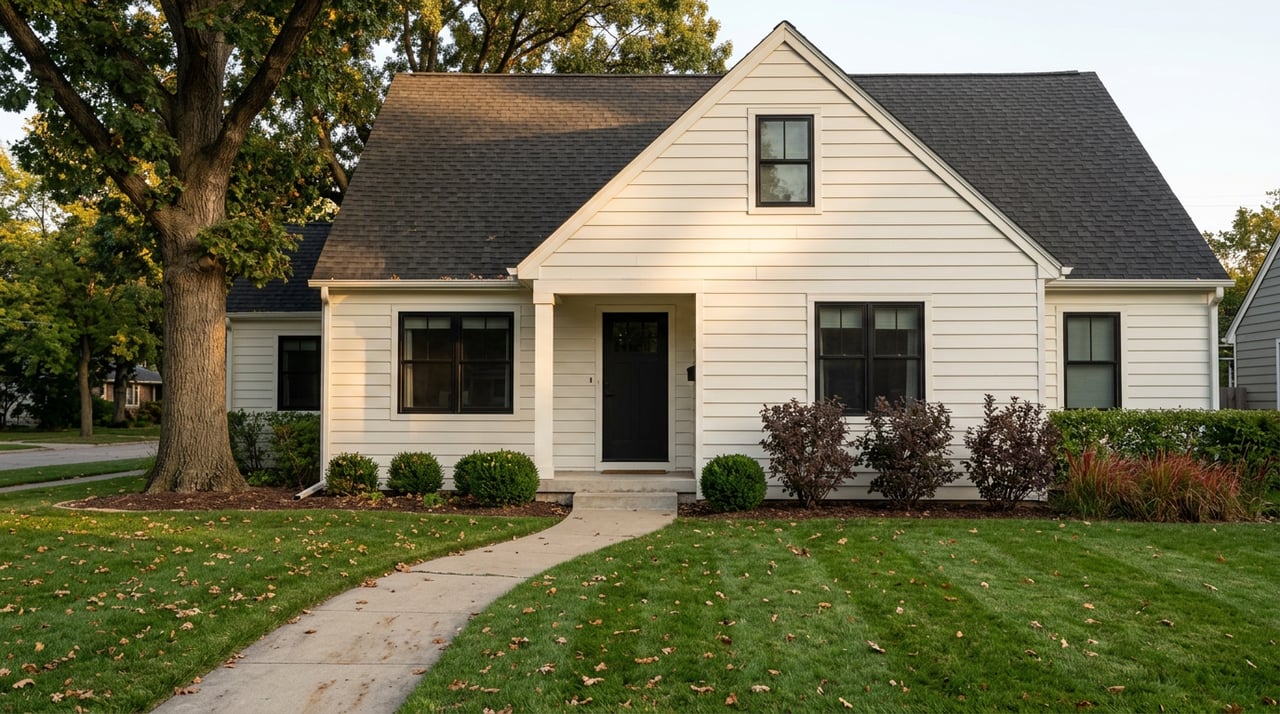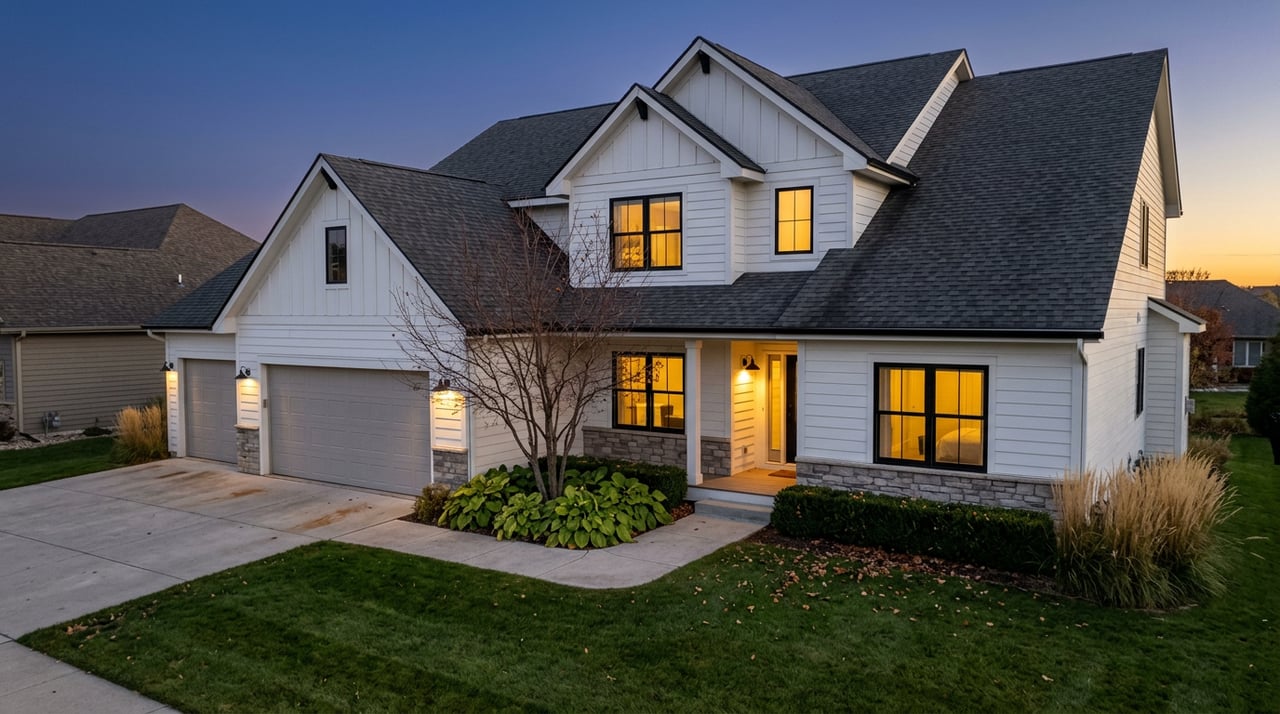
A buyer we worked with this summer toured two houses in Papillion in the same week. The first was a four bedroom resale in one of the city's established neighborhoods, priced firmly and showing zero flexibility, even after 40 days on the market. The second was a builder model a few miles away, priced roughly the same, but paired with a rate buydown, a design credit, and a sales rep who seemed eager to talk numbers before the buyer even asked.
Same city. Same price range. Same season. Two sellers who behaved like they were operating in different economies entirely.
That contrast is not a coincidence, and it is not really about the houses. It is about who is selling them and what each seller stands to lose by budging. Once you see that split, the way you read every Papillion listing changes.
The Gap Between What Sellers Ask and What Buyers Pay
Start with the numbers, because they hint at the split before you ever explain it. In August 2026, Papillion's median list price sat at $469,000, or about $194 per square foot, with homes spending a median of 68 days on the market, roughly the same pace as August 2025. Over the trailing six months, Papillion recorded 344 closed sales with a median sold price of $435,000.
List at $469,000. Close at $435,000. That is a $34,000 gap, about 7 percent, between what sellers put on the sign and what buyers actually pay.
A 7 percent list-to-sold gap is not unusual on its own. What is unusual is who is creating it. In a normal market, that gap comes from ordinary give and take, an offer here, a repair credit there, spread evenly across the market. In Papillion right now, the gap is lumpy. It comes almost entirely from one group of sellers giving ground while another group barely moves at all.
Why Resale Sellers Feel Immovable
The resale side of Papillion is full of homeowners who bought or refinanced when 30 year rates were sitting below 4 percent. As of a July 2026 report from the Federal Reserve, the majority of outstanding U.S. mortgages still carried rates under 4 percent, and the Fed pointed to that fact as one of the reasons existing home sales have stayed depressed even as prices hold up. Economists call it the mortgage rate lock in effect, and it is exactly what it sounds like. A homeowner with a 3.5 percent rate on a $300,000 loan is not just selling a house if they move. They are trading that rate for whatever the market is offering today, and that trade costs real money every month for as long as they hold the new loan.
That math changes how a resale seller negotiates. They are not choosing between selling at full price or selling at a discount. They are choosing between selling at close to full price or not selling at all, because a discount plus a higher rate on the next house is a double loss they have no reason to accept. So they hold firm, and if a buyer walks away, they wait for the next one.
The wrinkle is that this is not a slow market. Zoom out to Sarpy County, which includes Papillion, and the typical home value was about $360,294 as of the end of July 2026, up 2.3 percent from a year earlier, and homes across the county were going pending in roughly nine days. Nine days is fast. It just is not the same thing as flexible. A resale seller who prices realistically in Papillion right now can expect a quick sale near their number. A resale seller who overprices can expect a long, quiet standoff, because the buyers who would normally force a price correction through competition are thinner on the ground than they used to be.
Why Builders Play a Different Game
Now look at the other lane. Papillion's new construction market is not run by homeowners weighing a rate trade. It is run by builders carrying spec inventory, and a spec house that sits empty costs money every single day it stays unsold, in construction loan interest, insurance, property taxes, and marketing. That daily carrying cost is the entire reason builders behave differently from resale sellers with the same asking price on the sign.
D.R. Horton is currently the most active builder in Papillion, working across three single-family communities with roughly 30 available floorplans. Alongside Horton, buyers touring Papillion new construction this fall will run into names like Woodland Homes, Orchard Valley Inc., Hildy Homes, and ProLine Homes, each building spec and semi-custom product across the city's newer subdivisions.
Here is the part that catches buyers off guard: builders rarely cut the sticker price to move a stalled house. Instead they lean on incentives, a mortgage rate buydown, a design center credit, a covered closing cost. That is not generosity. It is a comps problem. Every home a builder sells in a subdivision becomes the appraisal comparable for the next one. Drop the price on one house and you have just lowered the ceiling for everything else you are building in that neighborhood. Offer a buydown or a credit instead, and the sale price on paper stays intact while the buyer still gets real money off their actual cost. It is a discount that protects the builder's future pricing power while still getting the house off the books.
That is why a builder can seem eager to deal within the first conversation while a resale seller down the street will not move a dollar after six weeks. Both are being rational. They are just responding to completely different incentives.
Reading the Two Markets Side By Side
| Resale Seller | Builder | |
|---|---|---|
| What they are protecting | A locked-in low mortgage rate | Comps for future homes in the subdivision |
| Cost of an empty house | Emotional, not financial | Real, daily carrying cost |
| Typical negotiating lever | Little to none on price | Buydowns, credits, upgrades |
| What fast movement means | Priced right, sells in days | Incentives working, not price cutting |
The practical upshot is that a buyer comparing a resale listing and a new construction listing at the same price point is not comparing two similar transactions. They are comparing two different negotiating postures wearing the same dollar sign.
What This Means Before You Write an Offer
If you are looking at resale in Papillion, treat a well-priced listing the way Sarpy County's nine day pending pace suggests you should, as a house that could be gone quickly if you hesitate. Do not expect a standoff to end in your favor just because it has sat for a while. It might end because the seller finally lists somewhere else, not because they finally discount.
If you are looking at new construction, do the opposite. Do not fixate on the sticker price. Ask what is being offered on financing and credits, and run the total cost of ownership, not just the purchase price, because that is where builders actually compete. A house priced $10,000 higher with a two point rate buydown can cost less over five years than the cheaper house next door with no incentive attached.
This is the exact terrain we walk buyers through at the Brian Wilson Team, because our work with Al Belt Custom Homes puts us on the builder side of these conversations as often as the buyer side. We know which incentives are standard and which ones signal a builder is actually motivated to move a specific lot, and we know how to read a stale resale listing to tell whether the seller is close to reconsidering or simply not going anywhere.
Frequently Asked Questions
If builders are motivated to sell, why don't they just lower the price instead of offering incentives? Because the sale price becomes the appraisal comp for every other home they are still building or planning in that subdivision. A price cut lowers the ceiling for future sales. A buydown or credit moves the current house without resetting that benchmark.
Will Papillion's resale inventory loosen up if mortgage rates come down? It should, at least somewhat. The lock in effect is a function of the gap between a homeowner's current rate and today's rate. Close that gap and more resale sellers who have been waiting will have less to lose by moving. Until that happens, expect the current pattern to hold, resale scarce and firm, new construction plentiful and negotiable.
If you are trying to figure out which lane makes sense for your budget and your timeline, schedule a call with the Brian Wilson Team. We will walk you through what is actually moving in Papillion right now, and what it would take to get the house you want on either side of that line.