If your idea of enjoying homeownership in Papillion includes less weekend upkeep and fewer seasonal headaches, you are not alone. Between summer heat, winter snow, spring hail, and the everyday flow of shoes, bags, pets, and yard work, a home can start to feel like a full-time project. The good news is that low maintenance does not mean giving up comfort or curb appeal. It means making smart choices that fit Papillion’s climate, your daily routine, and the way you want to live. Let’s dive in.
Why low maintenance matters in Papillion
Papillion homeowners deal with a wide range of weather through the year. Local climate patterns include about 31.86 inches of annual precipitation, around 27.1 inches of snowfall, summer average highs in the mid to upper 80s, and winter average lows that can dip into the teens. That kind of swing means your home and landscape need to handle heat, cold, moisture, wind, snow, and ice.
Nebraska Extension also notes that weather-ready landscapes in this region should be built for heavy rainfall, drought, extreme temperatures, high winds, hail, snow and ice, and winter desiccation. In practical terms, that means a low-maintenance Papillion home should be designed for durability, simplicity, and easier repairs when weather happens.
Hail is another reason to plan carefully. UNL reports that about 70% of hail reports in Nebraska happen from May through July. That makes it wise to favor exterior features that are easy to inspect, easy to maintain, and less dependent on delicate decorative details.
Start with a simpler exterior
A low-maintenance lifestyle often begins outside. The more complicated your exterior is, the more time and money it can take to keep it looking sharp after storms and seasonal wear.
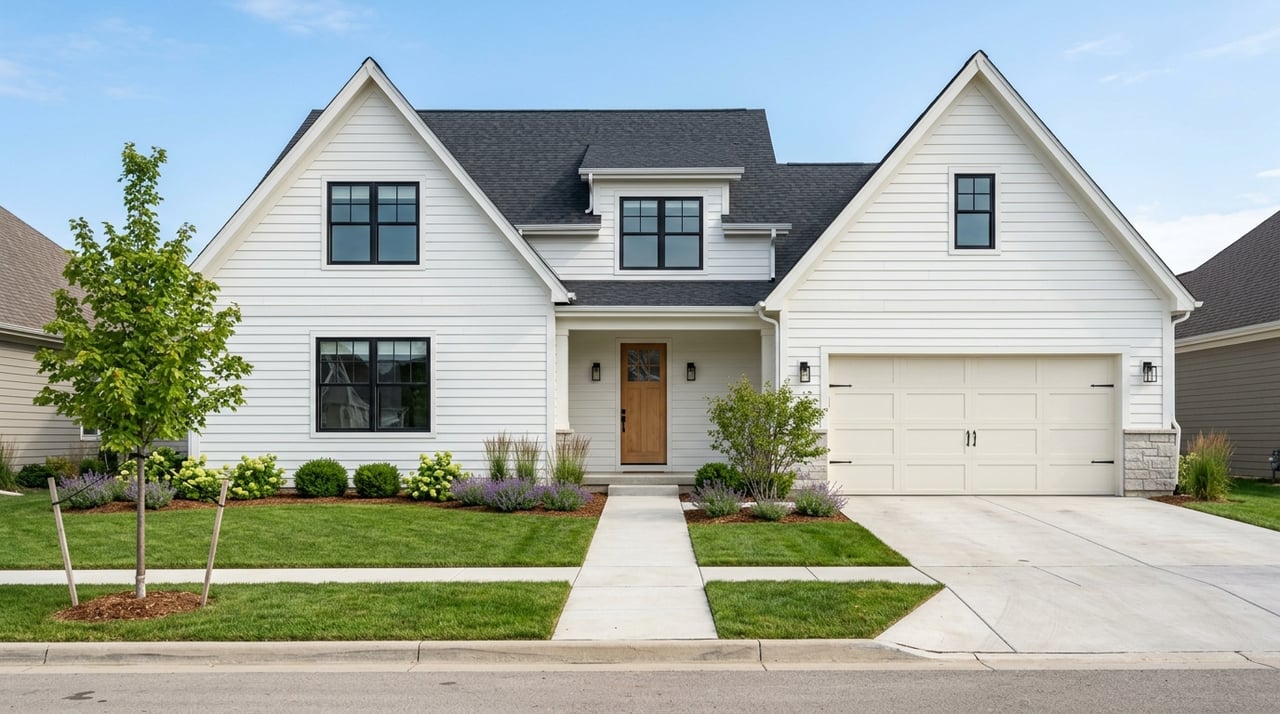
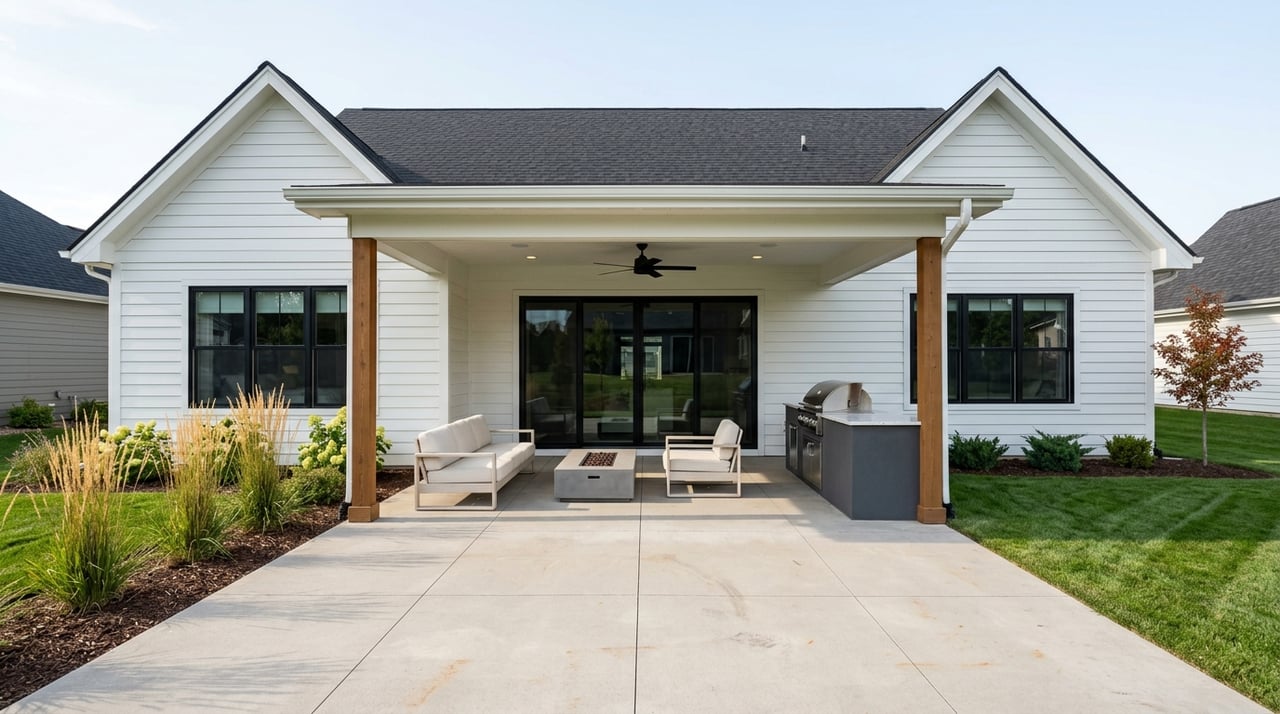
In Papillion, a smart exterior plan usually means clean lines, durable materials, and a layout that is easy to check after hail, wind, or snow. Fewer ornate trim details, fewer hard-to-reach features, and clearly defined rooflines can make routine care more manageable.
This approach also fits how many buyers think about newer homes and move-up homes today. You want a home that looks polished without creating a long to-do list every season.
Build a right-sized landscape
One of the biggest myths about low-maintenance living is that you need to remove all plants and cover the yard in rock. That is not what Nebraska guidance supports. In fact, a better strategy is a right-sized landscape with plants that suit eastern Nebraska and need less ongoing attention once established.
UNL defines drought-tolerant plants as plants that can survive on average rainfall with little or no supplemental water once established. Native plants are often lower maintenance because they typically need less water, fertilization, pest control, and pruning. They are also often more resilient to local pests, diseases, drought, and temperature swings.
That matters in Papillion because low maintenance should still mean site-appropriate. A yard that looks simple on paper can become high maintenance fast if the plants are not a good match for local conditions.
Choose plants that fit eastern Nebraska
A practical way to simplify your yard is to use fewer plant types and repeat them in grouped beds. That creates a cleaner look and usually makes watering, pruning, and seasonal cleanup easier.
UNL resources highlight drought-tolerant shrubs and perennials such as New Jersey tea, bluebeard, fragrant sumac, and sandcherry as examples of lower-input options. The goal is not to cram every bed with variety. The goal is to create a landscape that looks intentional and performs well with less hands-on care.
Use smarter turf options
If you want lawn space, grass choice matters. UNL says turf-type tall fescue uses less water than Kentucky bluegrass, and buffalograss is the most water-conserving turf option in Nebraska.
That does not mean every Papillion yard should switch to one grass type. It does mean that when you are planning a new build, refresh, or move-up purchase, it is worth thinking about how much irrigation and mowing you really want to manage.
Make mulch do more work
Mulch is one of the simplest tools for lowering landscape upkeep. UNL says organic mulch helps retain moisture, suppress weeds, moderate soil temperature, and reduce mower or string-trimmer damage around trees and shrubs.
For best results, UNL recommends keeping mulch at a 3- to 4-inch maximum depth and avoiding landscape fabric under organic mulch. A well-mulched bed can save you time, reduce watering stress, and help your landscape look tidy with less effort.
Group plants for easier care
Nebraska Forest Service recommends grouping trees and shrubs into larger mulched beds separated from turf zones. This matters because scattered plantings across the yard can turn mowing, trimming, and watering into a bigger chore.
Larger, defined beds are usually easier to manage and easier to keep neat. They also support the clean, restrained curb appeal many Papillion buyers want.
Water efficiently, not constantly
A low-maintenance landscape is not a hands-off landscape. New trees and shrubs still need watering during establishment, and even established plants need moisture during hot, dry periods.
The key is to treat irrigation as supplemental rather than automatic daily watering. UNL says soaker hoses or drip systems can save 60% or more in water use. That can make plant care more efficient while cutting down on wasted effort.
If you are planning a Papillion home for easier living, this is a smart place to focus. Watering systems that target the right areas can help you spend less time dragging hoses around the yard.
Design the inside for easier daily living
Low maintenance is not just about the yard. It is also about how your home works on a normal Tuesday when groceries, laundry, muddy shoes, and daily clutter all show up at once.
The easiest homes to live in tend to reduce friction. A main-floor primary suite, laundry near everyday living areas, and fewer level changes between the garage, entry, kitchen, and living room can make a real difference over time.
For many Papillion buyers, especially in newer construction or move-up homes, this kind of layout offers both convenience now and flexibility later.
Favor one-level function where possible
AARP and This Old House both point to features that make a home easier to use over time. These include no-step entries, wider doors, open aisles, first-floor living, and first-floor laundry.
Even if you are not planning a full accessibility remodel, these choices can still support a lower-maintenance lifestyle. They reduce obstacles, improve flow, and often make cleaning and movement through the home easier.
Reduce dirt-catching transitions
This Old House notes that level floors without thresholds can help avoid dirt-catching transitions. That small design detail can make a home easier to sweep, vacuum, and move through.
Open sightlines and simpler circulation paths can help as well. When a home feels easier to navigate, it usually feels easier to maintain too.
Pick easier-to-use hardware and fixtures
Lever-style door handles and lever-style faucet handles are practical upgrades. AARP also recommends handrails on both sides of stairways and night-lights near stairs, hallways, and bathrooms.
These may sound like small details, but they support everyday comfort and reduce hassle. Low maintenance is often about making ordinary tasks just a little easier.
Create better drop zones and storage
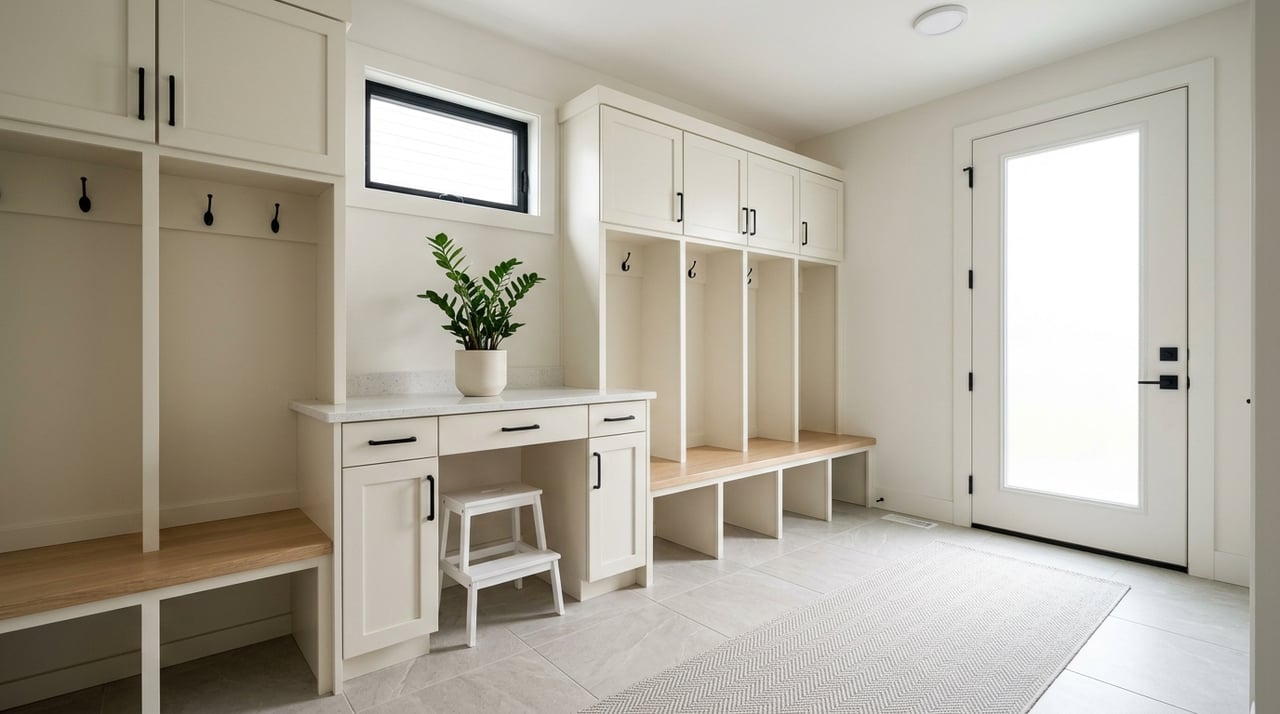
Clutter is a hidden form of maintenance. If your home does not have a place for shoes, bags, sports gear, coats, and pet items, those things spread into your main living spaces and create more cleanup.
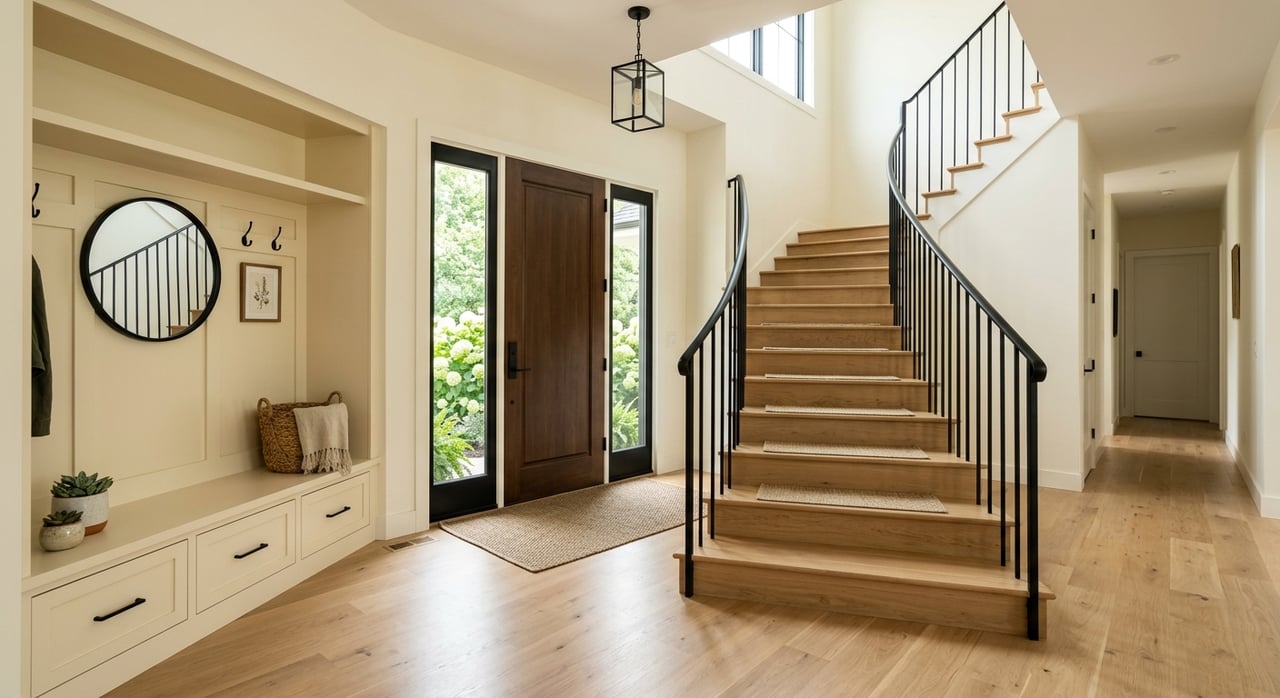
This Old House recommends entry benches, hooks at several heights, roomy pathways, deep drawers, pullouts, and pantry storage with often-used items within easy reach. In a Papillion home, that often translates well into a mudroom-style drop zone near the garage.
A well-planned storage system can make your home feel calmer and function better every day. It is one of the most overlooked ways to support a low-maintenance lifestyle.
Update bathrooms for easier upkeep
Bathrooms can either save you time or create more work. Features like curbless or no-step showers, hand-held or adjustable shower heads, lever-style faucets, and slip-resistant or non-glare finishes can make the space easier to use and easier to clean.
These choices support the bigger idea behind low maintenance. You are reducing awkward edges, minimizing trip points, and choosing finishes that work better for daily life.
Keep Papillion property standards in mind
Low-maintenance living still requires routine care. Papillion’s Property Maintenance Code defines excessive growth of weeds, grasses, or worthless vegetation over 12 inches as a nuisance, and cut waste must be removed and legally disposed of.
The code also treats trash, abandoned appliances, and other exterior clutter as nuisances. That makes simple mowing paths, intentional beds, and hidden storage especially helpful if you want a home that stays easier to manage and easier to keep looking neat.
What low maintenance really means
In Papillion, low maintenance does not mean no maintenance. It means choosing a home and yard that are more forgiving, more efficient, and easier to live with through Nebraska’s changing seasons.
The best setups usually combine a storm-conscious exterior, a restrained landscape with mulch and site-appropriate plants, and an interior layout that keeps daily tasks simple. If you are buying, building, or planning your next move, those details can have a real impact on how your home feels long after move-in day.
If you want help finding a Papillion home that supports the way you actually live, or you are weighing new construction against an existing home, Brian Wilson can help you compare options and plan your next step with confidence.
FAQs
What does a low-maintenance yard in Papillion usually include?
- A low-maintenance Papillion yard usually includes site-appropriate plants, defined mulched beds, simpler mowing areas, and efficient watering methods rather than high-input plantings or oversized lawn areas.
Do low-maintenance landscapes in Papillion have to use rock instead of mulch?
- No. UNL notes that organic mulch provides benefits like moisture retention, weed suppression, and soil temperature moderation that inorganic options do not provide in the same way.
Are native plants easier to maintain in Papillion?
- Yes, once established, native plants are often easier to maintain because they typically need less water, fertilization, pruning, and pest control than many non-native choices.
Can a low-maintenance Papillion landscape be completely hands-off?
- No. New trees and shrubs still need watering during establishment, and even drought-tolerant plants need proper site selection and moisture during hot, dry periods.
What home features support a low-maintenance lifestyle inside the house?
- Features like main-floor living, first-floor laundry, no-step entries, level flooring transitions, lever-style handles, and well-planned storage can make daily use and cleanup easier.
Why should Papillion buyers think about weather when planning a low-maintenance home?
- Papillion’s climate includes heat, cold, precipitation, snowfall, wind, and hail, so durable exterior choices and simpler landscape design can help reduce seasonal upkeep and make storm recovery easier.