If you are building a new home in Papillion, your backyard is more than leftover space. It is a chance to create an outdoor area that feels comfortable in summer, practical through changing seasons, and easy to maintain over time. With the right plan, you can make your outdoor space work harder from day one. Let’s dive in.
Plan Outdoor Living Early
One of the biggest advantages of new construction is timing. You can think through your patio, drainage, lighting, and planting plan before the yard is finished, which is often easier and more cost-effective than changing things later.
That matters in Papillion because outdoor features like fences, decks, patio covers, drive and patio work, and pools fall under the city’s accessory-use permit process. The city’s permit materials also call for an accurate site plan and construction drawings, so early planning can save time and help your project stay organized.
UNL also recommends making sustainable landscape decisions before grading and construction begin. That includes directing downspouts toward swales or rain gardens, minimizing hard surfaces, and moving runoff toward planted areas where possible.
Design for Papillion’s Four Seasons
Papillion-area outdoor spaces need to handle real seasonal change. Nearby NOAA climate normals for Omaha show warm summers, cold winters, about 31.86 inches of annual precipitation, and 27.1 inches of snow. July averages 88.1°F for highs, while December averages 37.7°F for highs and 19.8°F for lows.
For your backyard, that means shade, drainage, and durable materials should be part of the conversation from the start. A space that looks great in a model home photo may not feel as comfortable if it does not account for hot afternoon sun, runoff, or freeze-thaw cycles.
A well-planned layout can help your yard stay useful longer through the year. Covered areas, low-upkeep plantings, and smart placement of hardscape features can all make a big difference.
Covered Patios Add Everyday Comfort
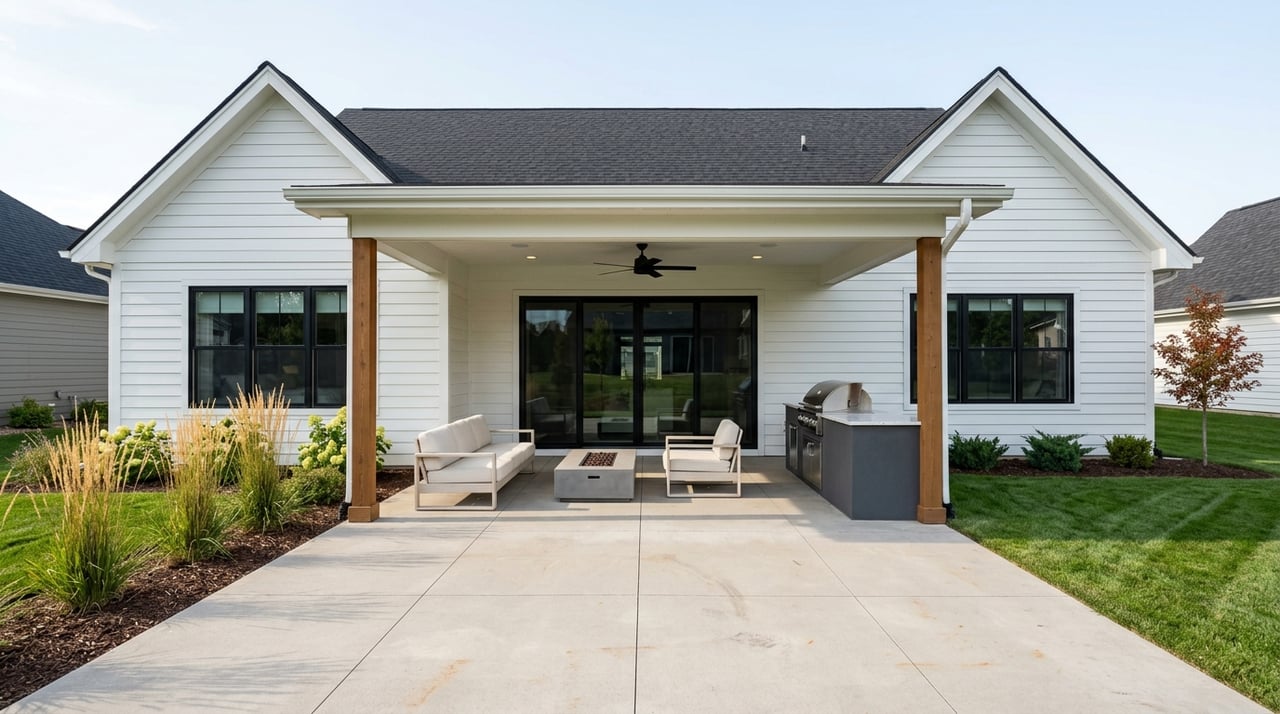
A covered patio is one of the most practical upgrades for a new construction home in Papillion. It creates shade during hot summer afternoons and can make the backyard feel more usable for a longer part of the year.
Because patio covers are part of Papillion’s accessory-permit process, this is the kind of feature you should coordinate with your builder or contractor early. If you wait until after construction, you may face more design limitations and added installation work.
When you plan a covered patio, think about how you will actually use it. You may want room for dining, a seating area, or ceiling fans and lighting that make the space more comfortable in the evening.
Features to consider under cover
- Seating space for everyday use
- Outdoor dining area
- Ceiling fan planning
- Built-in lighting or outlet locations
- Clear walking paths to the yard
Build Utilities Into the Original Plan
If you want an outdoor kitchen, a gas fire feature, patio lighting, or outdoor fans, the build stage is the right time to discuss it. Papillion’s current codes include the 2018 IRC, International Fire Code, International Fuel Gas Code, and NEC 2023, which makes early coordination especially important for electrical and gas elements.
In simple terms, it is usually easier to plan outlets, gas lines, switches, and fixture locations before the home and yard are fully finished. This can help your outdoor space feel more complete and reduce the need for disruptive add-ons later.
That is especially helpful in new construction, where the best results often come from treating the backyard as part of the home’s full design rather than as a separate future project.
Add Fire Features With Care
Fire pits and fire bowls can add warmth and atmosphere, but they need careful placement. Papillion’s adopted fire code says portable outdoor fireplaces and fire pits generally cannot be used within 15 feet of a structure or combustible material, except for a narrow gas-fired exception for one- and two-family dwellings.
Open-flame cooking devices also have distance limits from combustible construction. So if a fire feature or outdoor cooking area is on your wish list, it makes sense to plan that layout before your final patio design and landscaping are complete.
This is one of those details that can affect both comfort and compliance. A thoughtful plan can help you avoid crowding the patio or placing a feature where it may not work well long term.
Use Plants That Match the Site
A beautiful backyard does not have to mean high maintenance. UNL Extension recommends matching plant choices to sunlight, soil, moisture, and wind rather than forcing one look into every part of the yard.
For Papillion new construction homes, that often means keeping the planting plan simple and site-specific. Sunny open areas, drainage-prone spots, and shaded corners may all need different solutions.
Nebraska examples for lower-upkeep landscapes include little bluestem, switchgrass, purple coneflower, black-eyed Susan, wild bergamot, butterfly milkweed, wild plum, and red osier dogwood. Many ornamental grasses are also useful because they can tolerate drought, fluctuating winter temperatures, and a range of soil conditions.
Low-upkeep planting ideas
- Ornamental grasses for screening or edging
- Native-style perennials for sunny beds
- Shrubs that fit available root space and drainage
- Groundcovers for hard-to-mow areas
- Rain-garden plants where runoff collects
Think Carefully About Lawn Space
In many new construction yards, more lawn is not always better. It helps to reserve open turf or play space where you will truly use it instead of forcing grass into narrow strips, steep slopes, or deep shade.
UNL advises against high-maintenance turfgrass in difficult areas and recommends adapted or native groundcovers instead. That can lower upkeep and help the yard function better.
If you want a lower-input lawn in a sunny area, buffalograss may be worth considering. UNL describes it as native, drought tolerant, and lower in mowing and watering once established, but it does not establish well in even partial shade.
Solve Drainage With Design
Drainage is one of the most important parts of backyard planning, especially in a new build. A yard that looks flat and clean right after construction can still develop runoff issues if water does not have a place to go.
UNL highlights rain gardens as a good solution for areas that collect runoff from roofs, driveways, or open spaces. These are shallow planted depressions that hold water temporarily and usually drain within 48 hours.
For wetter rain-garden bottoms, UNL lists examples such as carex, Siberian iris, chelone, monarda, cardinal flower, and hardy geranium. A feature like this can do practical work while also softening the look of a new yard.
Make Shade a Long-Term Investment
Trees can be part of your outdoor living plan, not just your landscaping plan. Nebraska Extension notes that large shade trees can support energy savings, help with stormwater mitigation, and provide wind protection.
Tree placement matters, especially in a new construction setting where everything is still small. The Nebraska Forest Service recommends selecting trees based on mature size, root space, soil drainage, sunlight, and wind exposure so they do not conflict with buildings or sidewalks over time.
Tree diversity also helps create a more resilient landscape if pests or diseases appear. If you are planning your lot from scratch, this is a smart opportunity to think beyond what looks good this year and plan for how the space will feel in ten years.
Use Shade Areas Wisely
Not every corner of the yard should be turf. Under mature shade trees, UNL recommends ground-level plantings rather than raised beds, with examples such as hosta, astilbe, redbud, and serviceberry for dry shade below trees.
This kind of approach can reduce frustration and maintenance. Instead of fighting low-light areas, you can design them to feel intentional and polished.
That is often what makes a new construction yard stand out. The best outdoor spaces feel cohesive because each part of the lot is used in a way that suits the site.
Know Papillion Fence and Pool Rules
Privacy and backyard separation are often part of the outdoor-living conversation, but they come with local rules. Papillion code requires front and street-side-yard fences to have at least 50% openings, and it limits solid fences in visibility triangles.
For pools, the city requires an outdoor pool to be enclosed by a fence or wall at least six feet high with self-closing and self-latching gates. Outdoor spas must also have either a rigid cover or a code-compliant enclosure.
The city also states that property owners are responsible for determining property lines for final approval. If your outdoor plan includes fencing, a pool, or both, accurate layout work is important from the beginning.
A Better Backyard Starts With a Better Build Plan
The best outdoor living spaces in Papillion new construction homes do not happen by accident. They come from early planning, practical design choices, and a clear understanding of how the yard will function through all four seasons.
If you are building or buying a new construction home, it helps to work with an advisor who understands both the home and the site around it. From lot selection to builder coordination, the right guidance can help you think ahead about covered patios, drainage, utility planning, and landscaping that fits the way you want to live.
If you are exploring new construction in Papillion and want a more informed plan from the start, connect with Brian Wilson to Schedule a Call.
FAQs
What outdoor features are most practical for Papillion new construction homes?
- Covered patios, planned lighting, outdoor outlets, drainage solutions, and low-upkeep planting areas are some of the most practical features for Papillion’s four-season climate.
What permits may apply to backyard projects in Papillion?
- Papillion’s accessory-use permit process applies to features such as fences, decks, patio covers, drive and patio work, and pools, and the city requires a site plan plus construction drawings.
What should Papillion homeowners know about outdoor fire pits?
- Portable outdoor fireplaces and fire pits generally cannot be operated within 15 feet of a structure or combustible material, so placement should be planned carefully.
What low-maintenance plants work well in Papillion yards?
- UNL sources identify options such as little bluestem, switchgrass, purple coneflower, black-eyed Susan, wild bergamot, butterfly milkweed, and several ornamental grasses, depending on sun, soil, and moisture conditions.
Is buffalograss a good lawn option for Papillion homes?
- Buffalograss can be a strong low-input lawn choice in sunny areas, but it does not establish well in even partial shade, so shaded parts of the yard usually need a different strategy.
What are Papillion pool fence requirements for residential backyards?
- Outdoor pools must be enclosed by a fence or wall at least six feet high with self-closing and self-latching gates, and outdoor spas need a rigid cover or a code-compliant enclosure.