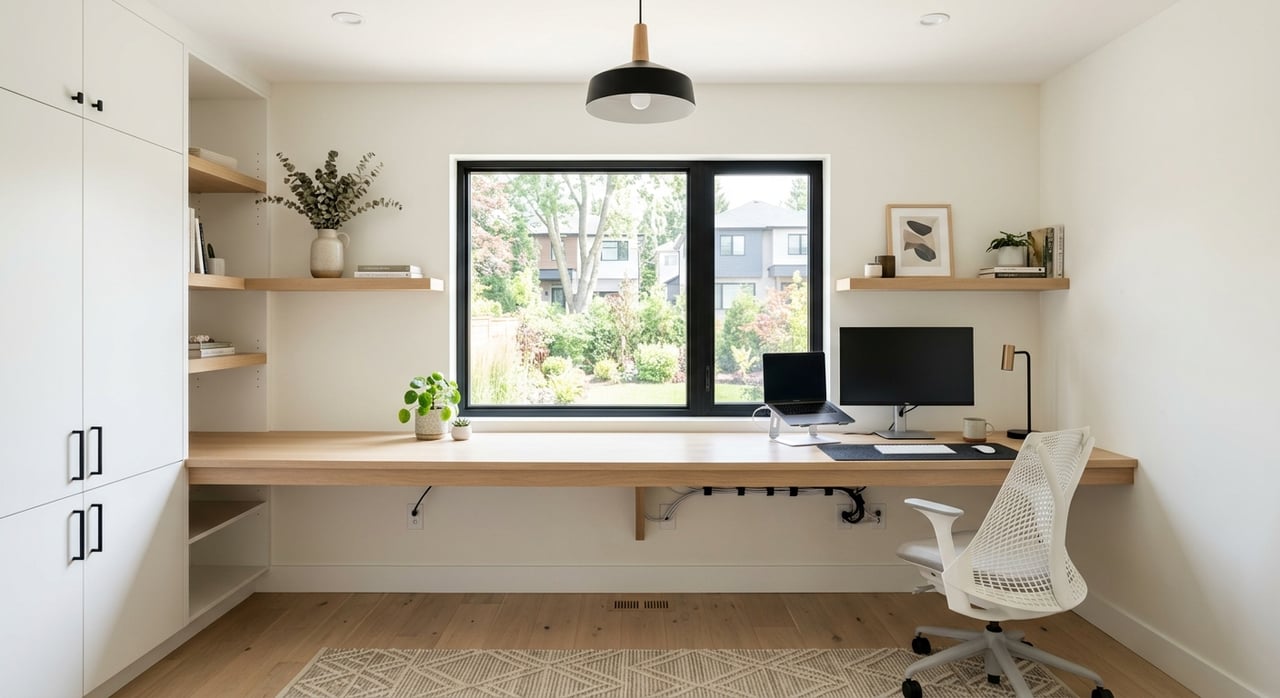
If you work from home even a few days a week, your floor plan matters more than ever. In Papillion, where 95.0% of households report a broadband subscription and 96.9% report having a computer, it makes sense to think about remote-work features early instead of trying to patch them in later. A smart new-build design can help you work more comfortably now while protecting flexibility and resale value down the road. Let’s dive in.
Why work-from-home design matters in Papillion
Papillion continues to grow as part of fast-growing Sarpy County, and the city plays a major role in that growth. That makes new construction especially appealing if you want a home that fits how you live today instead of forcing you to adapt later.
For many buyers, that means creating a space that supports focused work without turning the whole house into an office. In a market where broadband access is common and many households rely on connected devices, your internet setup, room placement, and energy choices deserve a place in the original plan.
Start with a flexible floor plan
The best home office in a new build is often not the flashiest one. It is usually a room that works well for work today and can serve a different purpose later.
That flexibility matters in Papillion, where many buyers value spaces that can shift with changing household needs. A room that can become a study area, guest room, or hobby space later may appeal to more future buyers than a highly customized one-purpose office.
Choose a room with a real door
If you take calls or need quiet focus, a room with a real door is a strong starting point. It creates separation from the rest of the home and makes it easier to manage sound during meetings and deadlines.
A dedicated room also tends to feel more polished than a desk dropped into a hallway nook or open loft. If you are building from scratch, this is one of the simplest design choices that can make daily life easier.
Keep the office away from noisy zones
According to GSA guidance on office comfort, acoustics, ventilation, and lighting all affect how well a workspace functions. In a home, that translates into placing your office away from heavy traffic areas like the kitchen, laundry, stairs, or play spaces.
If possible, avoid putting your office directly off the main living area. A little distance can make a big difference when you are trying to focus or sound professional on video calls.
Plan for more than one future use
A flexible office usually has better long-term value than a room built for only one task. Think about enough floor space for a desk plus guest furniture, storage, or a reading chair.
Built-ins can be helpful, but keep them practical rather than overly specialized. A closet, adaptable shelving, and a layout that supports multiple uses can make the room easier to enjoy now and easier to market later.
Design for sound, light, and air
A productive office is not only about square footage. It is also about how the room feels throughout the day.
Comfort depends on several systems working together, including lighting, HVAC, insulation, and sound control. If you address these items during the build, you can avoid expensive fixes later.
Use daylight without creating glare
Natural light can make your office feel brighter and more comfortable. It can also help the room feel less closed off during long workdays.
That said, too much direct light can create glare on screens and make video calls look uneven. A smart plan balances window placement with glare control, then adds task lighting so you are not relying on one bright ceiling fixture.
Add layered lighting
ENERGY STAR notes that home offices often use the most energy on lighting, cooling, and computers. That makes lighting design an important part of both comfort and efficiency.
Consider a layered approach that includes overhead lighting, task lighting at the desk, and dimmers or controls where possible. This gives you better visibility for work and helps you avoid over-lighting the room when you only need focused illumination.
Build in sound-softening features
GSA recommends strategies like absorption, blocking, and covering to help control sound. In a home office, that can mean using materials and design choices that reduce echo and limit noise transfer.
For a new build, options may include carpeting, curtains, better windows, acoustic ceiling materials, or other sound-softening finishes. Quieter HVAC equipment can also help reduce the background noise that becomes obvious during calls.
Make heating and cooling part of the plan
Papillion weather changes across the year, and nearby NOAA climate normals for Omaha Eppley Airfield show annual precipitation of 31.86 inches and annual snowfall of 27.1 inches. A home office that feels too hot in summer or too cold in winter will not get much use.
This is why insulation, tight ducts, moisture control, and good windows matter. If your office is over the garage, in the basement, or on a side of the home with strong afternoon sun, ask extra questions about how the space will stay comfortable in every season.
Treat internet like a utility
A beautiful office is only part of the equation. If your internet setup is weak, your workday will feel harder than it should.
Papillion has several internet providers marketed locally, including Quantum Fiber, Cox, and AT&T, with availability varying by address. Since service levels can differ from one area or lot to another, it is wise to verify options early in the building process.
Ask about provider availability by address
Do not assume every new-build location has the same internet choices. Some services advertise high speeds, but actual availability depends on the specific site.
Before you finalize a lot or floor plan, confirm what providers serve that address and what speeds or data terms apply. This is especially important if you handle large files, frequent video meetings, or multiple users working from home at once.
Plan wiring before the walls close
In a new build, low-voltage planning should happen early. Think about where your office will be, where equipment will sit, and whether you want hardwired connections for speed and reliability.
Even if you use Wi-Fi most of the time, planning for wired internet in a dedicated office can give you a stronger and more stable setup. It is much easier to account for that before drywall goes up.
Think carefully about basement offices
A basement office can work well in a new build, but it deserves extra planning in Papillion. The city states that floodplain development permits are required for development in the Special Flood Hazard Area, and residential lowest floors, including basements, must be elevated one foot above base flood elevation.
That does not mean a basement office is off the table. It simply means lot selection, drainage, grading, and code requirements should all be reviewed carefully before you commit.
Review lot drainage and site conditions
Papillion also notes that its stormwater management regulations were adopted to control runoff. For buyers considering a basement workspace, site conditions are part of the design conversation, not an afterthought.
Ask how the lot drains, how grading will direct water away from the home, and how the basement space will be protected and finished. These questions help you think beyond layout and focus on long-term comfort and durability.
Keep future permits in mind
Home plans often change after move-in. What starts as an unfinished area or simple flex room may later become a finished office, guest suite, or bonus room.
Papillion’s permit resources include applications for a new single-family residence, residential remodel or interior finish or addition work, and guidance related to egress windows. If your office plan may evolve later, it helps to understand early what could require permits or additional review.
Focus on resale-friendly choices
Even if you plan to stay for years, your design choices should support future appeal. The strongest long-term strategy is usually flexibility, not over-customization.
In Papillion, where many households are highly connected and room usage may shift over time, a practical office can be a meaningful selling point. Buyers often respond well to spaces that feel useful without feeling locked into one purpose.
Prioritize function over novelty
A dramatic built-in setup may look impressive, but it will not fit every future buyer’s needs. A clean, comfortable room with storage, light, and privacy usually has broader appeal.
Try to choose features that improve daily use without making the room feel too specific. That balance can help your home stand out while still giving future buyers options.
Think about life stages
Papillion-La Vista Community Schools reported 12,039 enrolled students in 2023–24 and a 95% graduation rate in 2023. Without tying your design to any one household pattern, that data supports a practical point: flexible rooms can serve many purposes over time.
A home office today might become a homework room, guest room, hobby space, or quiet study area later. When you build with that kind of adaptability in mind, you give yourself more options and support resale value at the same time.
A smart checklist for your new build
If you are designing a work-from-home friendly new build in Papillion, keep this checklist handy:
- Choose a room with a door
- Place the office away from kitchen, laundry, stairs, and play areas
- Confirm internet provider availability for the address
- Plan wired internet and device placement early
- Use daylight carefully and control glare
- Add layered lighting with task lighting and dimmers if possible
- Ask about insulation, ducts, windows, and HVAC noise
- Consider sound-softening finishes
- Review lot grading, drainage, and basement conditions
- Keep the room flexible for future uses and resale
Why local guidance helps
Building a home that works well for remote life is about more than picking finishes. It involves floor plan flow, site conditions, comfort systems, technology planning, and long-term value.
That is where construction-savvy guidance can make a real difference. When you have a local advisor who understands new construction in Papillion, you can make design choices with more clarity and fewer surprises.
If you are planning a new build in Papillion and want help evaluating lots, floor plans, builder options, and resale-friendly features, connect with Brian Wilson to Schedule a Call.
FAQs
What makes a new-build home office practical in Papillion?
- A practical home office in Papillion usually includes a private room with a door, strong internet planning, balanced lighting, sound control, and flexible design that can serve other uses later.
Should a Papillion new build include a dedicated office or a flex room?
- For many buyers, a flex room is the safer choice because it can function as an office now and later serve as a guest room, study space, or hobby room.
How important is internet planning for a Papillion new build?
- Internet planning is very important because provider availability and service levels can vary by address, so it is smart to verify options before finalizing a lot or floor plan.
Is a basement office a good idea in Papillion?
- A basement office can work well, but you should review floodplain requirements, lot drainage, grading, and moisture control carefully before choosing that location.
What features help reduce noise in a home office?
- Helpful features can include a room away from busy parts of the house, carpeting, curtains, better windows, sound-softening materials, and quieter HVAC equipment.
How can a work-from-home space support resale in Papillion?
- A work-from-home space can support resale when it is designed as a flexible room with privacy, storage, and enough space to adapt to future needs instead of serving only one narrow purpose.